Inclusive Mobility
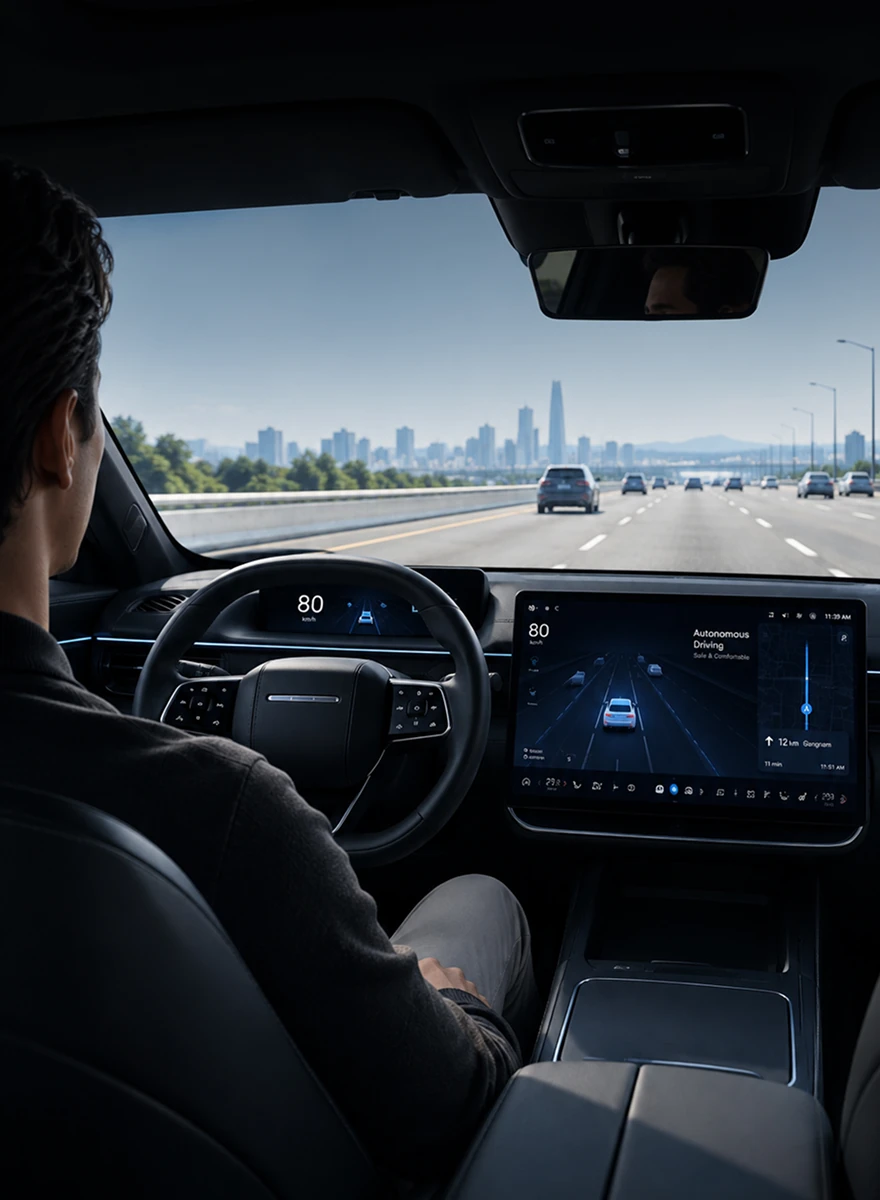
AI and autonomous driving technologies help close mobility gaps and make mobility safer.



The K-Mobility Alliance Shaping Sustainable Cities
The mobility market is rapidly evolving around the commercialization of autonomous driving and the transition to AI. Responding to these changes requires not only technological innovation, but also supportive institutions and policies and social acceptance. NUMA (Next Urban Mobility Alliance) is a collaborative ecosystem that brings together businesses, central and local governments, and academia to shape the future of sustainable urban mobility.
The mobility market is rapidly evolving around the commercialization of autonomous driving and the transition to AI. Responding to these changes requires not only technological innovation, but also supportive institutions and policies and social acceptance. NUMA (Next Urban Mobility Alliance) is a collaborative ecosystem that brings together businesses, central and local governments, and academia to shape the future of sustainable urban mobility.
NUMA
NUMA aims to create a mobility ecosystem where everyone can move freely and safely. Through data connectivity across technology, services, and policy, along with AI innovation, NUMA seeks to strengthen the global competitiveness and growth of Korea’s mobility industry.
AI and autonomous driving technologies help close mobility gaps and make mobility safer.

Connecting technology, services, and policy through data drives new growth in the AI mobility industry.
NUMA Roadmap
Starting with A-MaaS initiatives to close mobility gaps and demonstrate autonomous driving, NUMA advances the future of smart cities through data integration and the AI transformation of public transportation.

NUMA Network
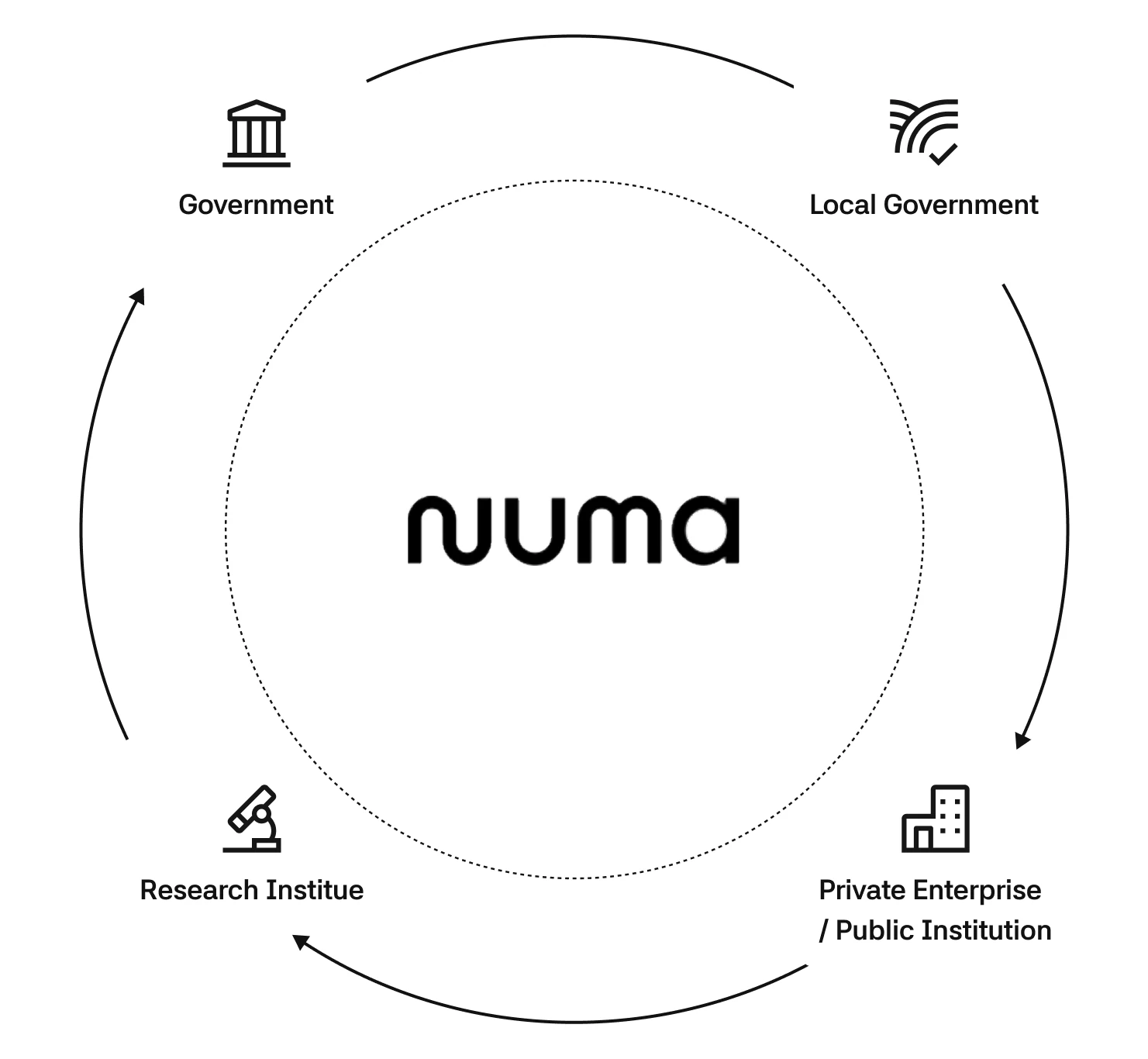
A total of 33 organizations participate in NUMA, including government agencies providing policy support, private companies driving technology development and service demonstrations, local governments providing test fields, and research institutions conducting empirical analysis and offering policy recommendations. The network continues to grow. Hyundai Motor Company and Kia work with participating organizations and companies to operate the alliance. They support the identification of practical initiatives and collaboration among participants.

Policy Support and Strategic Direction
Central government policy support and strategic direction aim to promote balanced national development, secure new growth engines, and strengthen the social safety net.

Test Field Support
Regional and local governments open citywide infrastructure as demonstration environments (testbeds/test fields) to help innovative technologies and products enter the market. They also support demonstration costs and help companies build track records.

Service Demonstration
Service demonstration is the process of applying new technologies, products, or ideas in real-world or similar environments to validate performance, stability, and business viability.

Empirical Analysis / Policy Recommendations
Empirical Analysis and Policy Recommendation are two key pillars of policy research, academic papers, and reports. Empirical Analysis is “the process of objectively examining the causes and effects of a phenomenon through data and statistics,” while Policy Recommendation is “the process of proposing concrete solutions to real-world problems based on the findings.”
Click the button below to view the latest updates.

